
Small business funding with bad credit is achievable through alternative lenders, microloans, and equipment financing that emphasize annual revenue and time in business over personal credit scores. While interest rates may be higher, these capital sources provide essential liquidity for growth and help establish a positive payment history. Businesses can often qualify by demonstrating consistent cash flow or providing collateral to mitigate lender risk.
Traditional financial institutions often prioritize rigid credit metrics over the operational health of a scaling enterprise. If your business has faced rejection due to a subprime credit score, you know the frustration of having a viable roadmap for growth without the liquidity to execute it. In the competitive 2026 market, a FICO score of 500 or 600 should not be the sole determinant of your professional trajectory. This guide provides a sophisticated overview of how to navigate the current lending landscape. We will analyze the nuances of SBA loan eligibility, debunk common myths surrounding no credit check funding, and detail alternative capital sources. Furthermore, we will explain the strategic relationship between your credit card processing and your ultimate eligibility for high value financing; you will gain the practical insights necessary to secure funding and drive sustainable growth.
Understanding the 2026 Landscape for Small Business Funding with Bad Credit
Navigating the capital markets in 2026 requires a distinct shift in perspective. In the current Henderson, Nevada market and across the U.S., traditional institutions maintain a rigid barrier, typically requiring a personal credit score of 680 or higher for standard commercial loans. For many entrepreneurs, this threshold feels like a dead end. However, the definition of bad credit is not universal. While a FICO score below 620 might trigger an automatic rejection at a big bank, the alternative lending landscape now places heavier weight on a company's operational health.
It is essential to distinguish between your personal credit history and your business credit profile. Personal scores reflect individual debt management, whereas business scores like the Paydex or Intelliscore focus on your payment history with vendors and suppliers. We understand the frustration of being reduced to a three digit number. At TMH Consultancy, we specialize in providing comprehensive funding solutions that look at the whole picture rather than just a credit report.
Our approach prioritizes consistent monthly revenue and time in business, often requiring as little as six months of history to secure capital. By evaluating daily cash flow and sector-specific performance, we help bridge the gap for those seeking small business funding with bad credit who have been overlooked by traditional finance.
Can You Qualify for SBA Loans with a 500 or 600 Credit Score?
A frequent question we encounter at TMH Consultancy involves the feasibility of securing an SBA loan with a credit score in the 500s or low 600s. To understand the answer, you must distinguish between the Small Business Administration (SBA) guidelines and the internal requirements of participating lenders. While the SBA does not mandate a specific minimum credit score for its flagship 7(a) or 504 programs, the banks and credit unions that actually issue the funds almost always do.
In the 2026 lending environment, a personal credit score of 500 makes obtaining an SBA loan exceptionally difficult. At this level, most traditional lenders perceive the risk as too high, regardless of the government guarantee. However, if your score sits between 600 and 640, the conversation changes. Approval becomes possible if you can offset the lower score with strong secondary factors, such as significant tangible collateral, a high equity injection, or a business plan that demonstrates ironclad projected cash flow.
Credit Score Range | SBA Loan Viability | Primary Focus for Approval |
|---|---|---|
680+ | High | Standard financial documentation |
600 - 640 | Moderate | Collateral, business plan, and industry experience |
Below 600 | Low | Focus on alternative capital sources |
For entrepreneurs with scores below 600, the most productive immediate strategy is to shift focus away from SBA products. The lengthy application process for a likely rejection can cost your business valuable time. Instead, exploring comprehensive funding solutions that prioritize your daily bank balances and operational history allows you to secure capital faster. This targeted approach ensures you are not stalled by a single number while you work to rebuild your credit profile for future long term financing.
Alternative Funding Options for Low Credit Score Borrowers

Shifting focus from traditional SBA products to alternative capital structures requires a fundamental change in how a business presents its value to a lender. When personal credit history is not the primary selling point, the business's operational performance must take center stage. For entrepreneurs navigating the complexities of small business funding with bad credit, three specific models provide viable paths to capital by prioritizing current assets and cash flow over a three digit score.
Revenue-based financing and Merchant Cash Advances (MCAs) are two of the most agile options for businesses with significant daily transaction volume. In revenue-based financing, lenders scrutinize monthly bank deposits to determine a funding amount, typically providing a lump sum in exchange for a fixed percentage of future gross revenue. This model is particularly effective for companies showing consistent operational strength. Merchant Cash Advances function similarly but focus specifically on credit card sales. Because these products are technically a purchase of future receivables rather than a standard loan, the underwriting process is streamlined and significantly less reliant on FICO scores.
Funding Type | Primary Collateral | Key Evaluation Metric | Impact of Credit Score |
|---|---|---|---|
Equipment Financing | The asset being purchased | Value of the equipment | Low |
Revenue-Based Financing | Future gross revenue | Monthly bank deposits | Moderate |
Merchant Cash Advance | Future credit card sales | Daily transaction volume | Low |
Equipment financing offers a distinct advantage by utilizing the machinery, vehicles, or technology being purchased as the underlying collateral. Because the lender can recoup their investment by repossessing the asset in a default scenario, they are often willing to overlook a lower credit score. For specialized sectors, unique underwriting models exist that go even deeper into industry performance. We frequently assist providers seeking healthcare practice funding, where lenders prioritize patient volume and insurance billings. By treating medical receivables as the primary security, practitioners can access comprehensive funding solutions to upgrade facilities or expand staff despite past credit challenges. These performance-based models ensure that a temporary dip in credit does not result in a permanent halt to business growth.
Small Business Funding No Credit Check: Myth vs Reality
The search for small business funding with bad credit often leads entrepreneurs toward the enticing promise of "no credit check" loans. In reality, legitimate commercial lending requires a baseline verification of the borrower's identity and financial history. Almost all reputable lenders will perform a soft credit pull; this inquiry allows them to view your credit profile without triggering a hard inquiry that negatively impacts your score. When marketing materials use the term "no credit check," they typically mean that your personal FICO score is not the primary determinant for approval, or that they will not perform a hard pull during the initial pre-qualification phase.
It is vital to remain cautious of lenders who claim to ignore credit entirely without any verification process. These offers frequently stem from predatory sources characterized by hidden fees and unsustainable interest rates. Navigating these nuances is why we provide comprehensive funding solutions that include thorough offer vetting. By working with a consultancy, you ensure that the terms are transparent and that your long term financial health is protected from lenders who prioritize high-cost debt over your business's success.
How to Improve Your Approval Odds with Poor Credit
Securing small business funding with bad credit requires a proactive strategy to mitigate perceived risk. Lenders prioritize stability over perfection; therefore, your primary focus should be on demonstrating liquidity. Maintain higher average daily bank balances for at least three months prior to applying. Lenders analyze your ending daily balance to ensure you can cover repayments without straining operations.
Documentation also plays a critical role in the approval process. Prepare a precise 'Use of Funds' statement that details exactly how the capital will generate a return on investment. Beyond simple accounting, you should optimize your merchant services. High quality credit card processing provides a transparent audit trail of your revenue, making it easier for underwriters to verify your cash flow and consistency.
Finally, address any external factors suppressing your score. Identity theft often results in fraudulent accounts or errors that drag down your creditworthiness without your knowledge. At TMH Consultancy, we integrate identity theft protection and processing optimization into our comprehensive funding solutions to ensure your profile accurately reflects your actual financial behavior. By combining these operational improvements with robust security measures, you present a much stronger case to alternative lenders who value transparency and cash flow stability over a static credit score.
The Strategic Connection: Credit Card Processing and Funding Eligibility
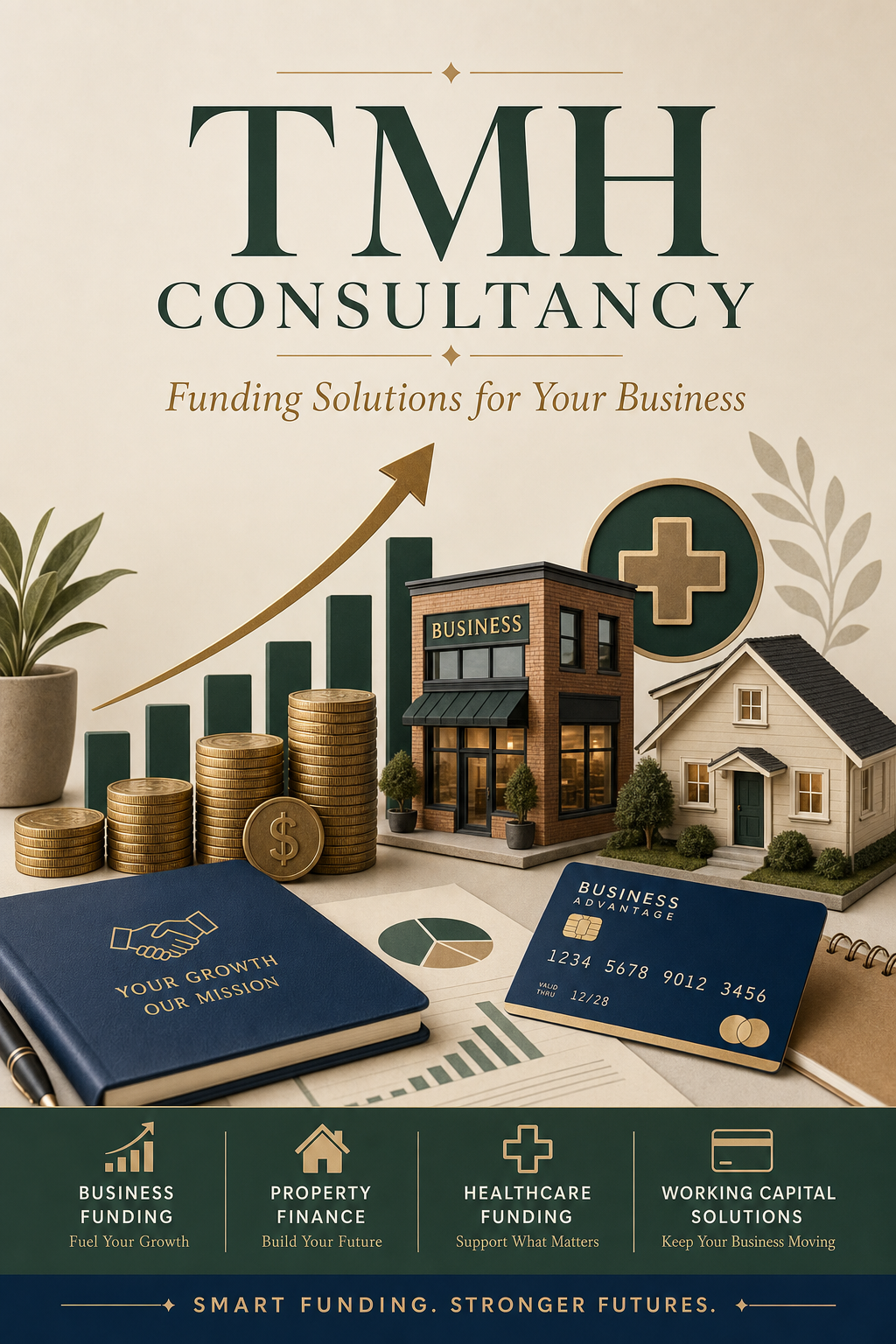
Modern credit card processing serves as a digital ledger that functions as a vital proof of health for your business. For entrepreneurs in Henderson or across the country, high quality processing services provide the real-time transparency that alternative lenders demand when evaluating small business funding with bad credit. Instead of relying solely on historical tax returns, modern underwriters analyze processing statements to gauge daily transaction volume, average ticket sizes, and customer retention patterns. This data offers a more accurate, dynamic picture of your business's current viability than a static FICO score.
To maximize your eligibility, you should conduct a rigorous audit of your merchant services for both cost and security. High processing fees directly erode your net income, which negatively affects your debt-to-income ratio during the underwriting process. By optimizing these fees, you improve your bottom line and demonstrate to lenders that your operations are efficient. Furthermore, robust security protocols minimize chargebacks and fraud, reducing the perceived risk for lenders. Integrating these comprehensive funding solutions into your daily operations transforms your merchant data into a powerful asset that strengthens your case for capital.
How TMH Consultancy Supports Growth Beyond Capital

Leveraging merchant data is only one component of a broader growth strategy. At TMH Consultancy, we look beyond the immediate transaction to provide a holistic support structure. We recognize that securing small business funding with bad credit is often just the initial step toward long term stability. Our firm, rooted in Henderson, Nevada, serves the entire USA with comprehensive funding solutions that prioritize financial security through integrated identity theft protection.
This security service is vital because a business owner's personal assets and credit profile are frequently the foundation of their business viability. By monitoring and shielding these assets, we prevent fraudulent activity from undermining your future capital opportunities. Furthermore, we invite individuals to join our partner program, allowing you to help other entrepreneurs find the funding they need while building your own professional path. This multi faceted approach ensures that Henderson based expertise supports your business's health, security, and expansion nationwide.
Securing capital with a low credit score requires a blend of persistence and a strong focus on your current business performance. While the path to funding in 2026 involves more specialized lenders, it remains a viable way to fuel your company's growth. Navigating these various financial avenues can feel overwhelming at times. If you want expert help identifying the best strategy for your needs, we invite you to explore our Services for personalized guidance. We are here to help you turn challenges into opportunities for lasting success.